There is a particular kind of quiet that settles in after 10 PM. The screens dim. The notifications stop. The air cools. And for the first time all day, your hands have nothing to hold—until you reach for a journal.
Most journaling advice sounds like a productivity directive: write every day, set a timer, fill three pages. But what if the goal wasn't output, but arrival? What if your evening journaling routine became less about documenting the day and more about unwinding from it?
This is not a productivity guide. This is an invitation to slow down.
Before You Begin: Fewer Things, More Intention
A sustainable evening ritual doesn't need a cart full of supplies. Start with three:
- A journal with textured paper — something that feels alive in your hands. Our Embossed Vintage Travelers Notebook carries the weight of old-world papermaking: deckled edges, visible grain, and a cover that softens with use.
- A writing tool that glides — fountain pen, rollerball, or charcoal pencil. No ballpoint.
- A single tactile accent — a strip of washi tape, a page holder, a pressed leaf. One sensory detail per entry.
That's it. The ritual thrives on limitation. Too many choices break the trance.
The Ritual: 6 Sensory Steps
1. Light a candle (or dim the lamp)
Bright overhead light belongs to the workday. Switch to a warm glow. Your brain will register: we are no longer in productivity mode.
2. Touch the paper before you write
Run your fingers across the page. Feel the deckle edge, the grain, the slight resistance of vintage stock. This is the handshake between you and the journal.
Watch & listen: the soft rustle of vintage paper under fingertips.
3. Write three lines as a baseline
Not three pages. Three lines. A sentence about what you noticed today. A fragment of a dream. A doodle that makes no sense. If the mood carries you further, follow it — but the constraint removes the pressure to perform, and most nights, three lines is enough.
4. Add one tactile mark
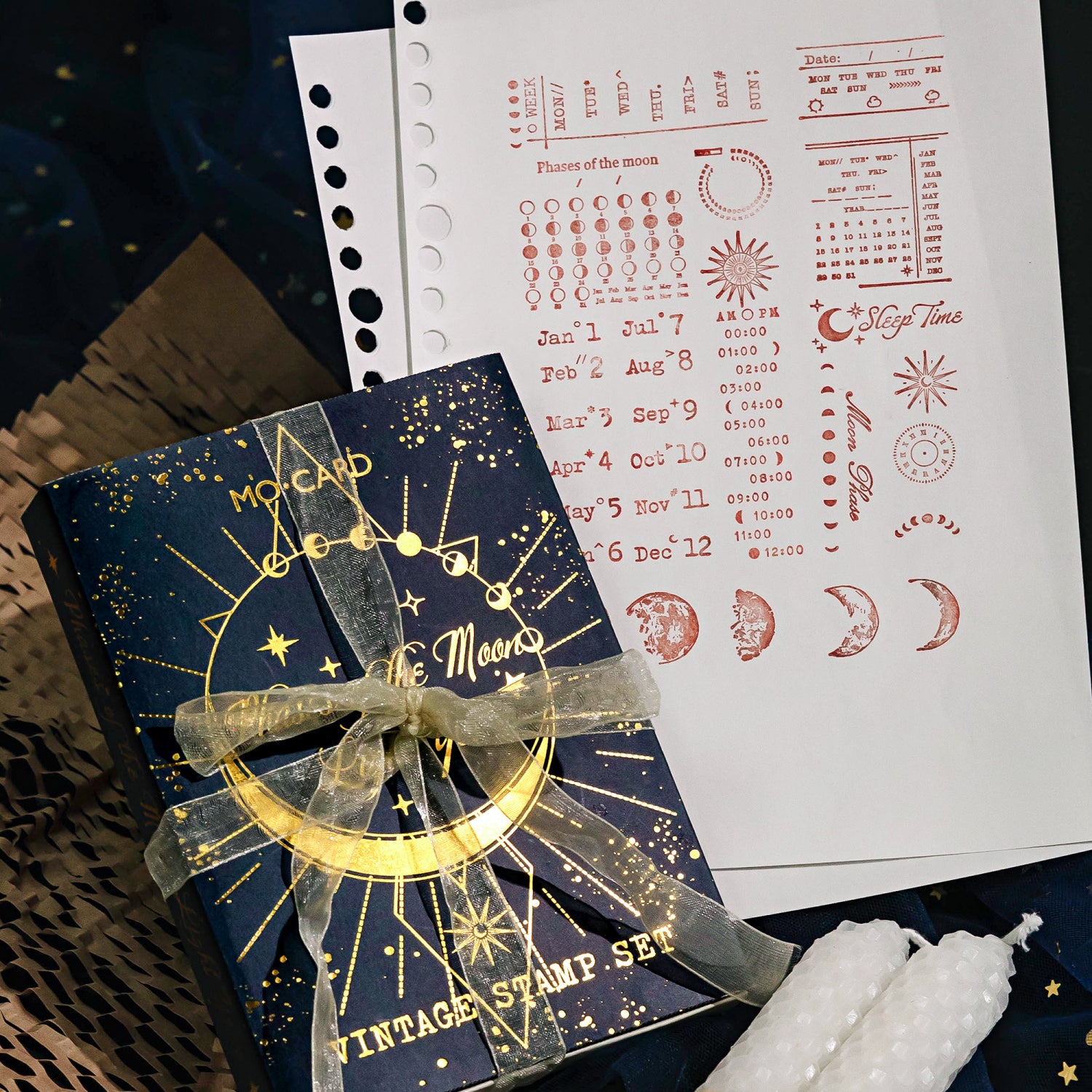
Tear a corner of washi tape and press it into the margin. Reach for a hand-carved wooden stamp, press it gently down, and watch the ink transfer slowly onto the page. This small physical act — the press, the ink, the mark — closes the entry with ceremony, not speed. It's not just a stamp; it's a hand‑held gesture of presence.
5. Read it back—once
Not to edit. To hear your own voice outside your head. You might surprise yourself.
6. Close the journal without judgment
Don't evaluate whether it was "good enough." The ritual is the point. Close the cover. Blow out the candle. The page will be there tomorrow.
Why It Sticks
A phone asks you to react. A page lets you arrive.
Screens demand a response. A notification expects an answer, a like, a swipe. Paper asks for nothing but your presence.
An evening journaling routine works not because you force yourself to write, but because you start craving that quiet moment when your hands slow down and your breath follows. It becomes the part of the day you don't want to skip — not another task to check off.
How to Make It Last
- Keep the journal visible — on the nightstand, not in a drawer. Visual cues beat willpower.
- Pre-tear your washi tape — remove one more barrier between you and the ritual.
- Anchor to an existing habit — after brushing your teeth = journal time. Don't invent a new trigger.
- Allow two-minute entries — a bad entry beats a blank page.
- End with touch, not a screen — close the journal. Press your palm on the cover. That physical closing gesture signals completion to your nervous system.
FAQ
How long should my evening journaling routine take? Five to fifteen minutes is the sweet spot. Short enough to feel doable after a long day, long enough to shift your mental state. If you're writing longer, you're probably forcing it.
What if I miss a night? The ritual doesn't reset. It resumes. Missing one evening doesn't break the habit — telling yourself you've "fallen off" does. Simply open the journal and write your three lines.
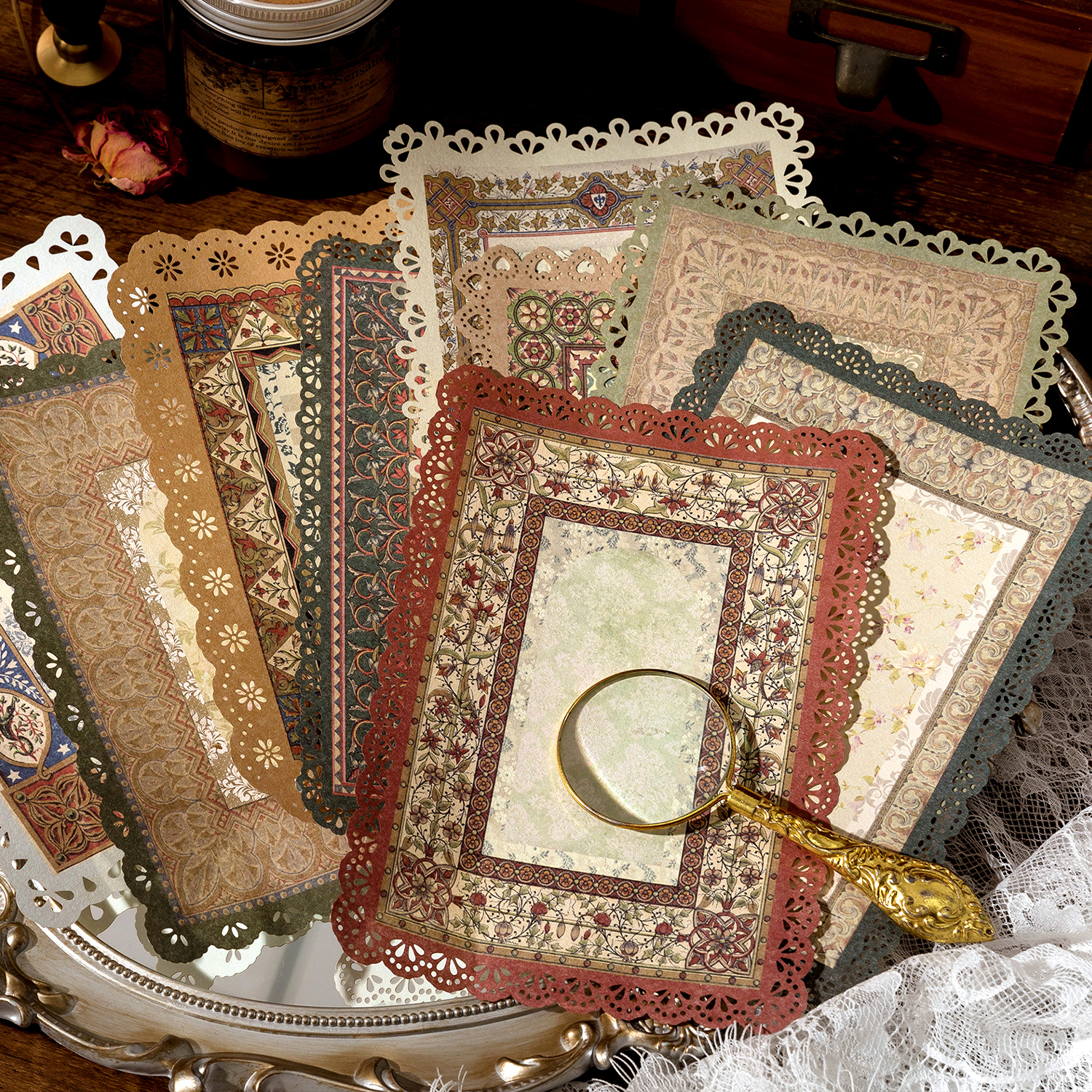
Can I use any journal, or does paper quality matter? You can use any journal. But paper with tactile weight — vintage texture, deckled edges, archival grain — invites a different kind of attention. When your fingers register quality, your mind follows. Browse our vintage paper range to find paper that asks to be touched.
Find Your Evening Rhythm
Your evening journaling routine doesn't need to be elaborate. It needs to be yours. A few minutes, a textured page, a quiet hand. That's the entire recipe.
PaperLooms curates materials for slow creators — vintage paper sourced from archival-grade stock, and textures chosen for how they feel in the hand. This ritual was developed and tested by our community of junk journal artists who believe that the right materials don't just decorate a practice — they invite you to return to it.
The Nightingale's Love Poems Vintage Journal Kit